
FUTURE STAR AGENT
AI System Architect | Workflow Designer
Project Overview
Summary
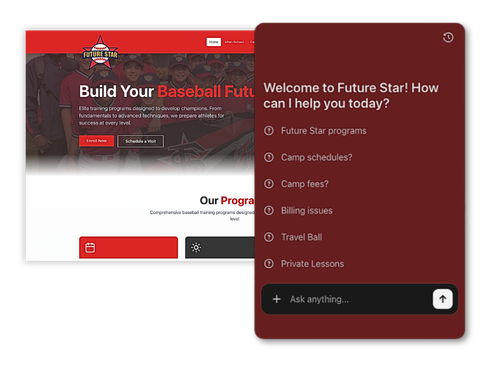
In partnership with Future Star Baseball, a youth travel ball sports organization established in 2003, I am leading a comprehensive digital rebrand. Modernizing a legacy sports brand via a total web overhaul. The project features a custom AI agent framework to manage complex organizational workflows and enhance the user experience for the next generation of athletes.
I was architect of this conversational agent using OpenAI’s Agent Builder to redefine how users interact with the Future Star website. By combining natural language processing (NLP) with a personalized logic layer, the agent provides precise, context-aware assistance. It’s built to optimize communication flows and provide a seamless, human-centric interface for businesses looking to scale their digital presence.
Technical Stack & Integration
Platform
OpenAI Agent Builder
Models
GPT-4o, GPT-5
Data Logic
JSON Schema, CEL (Common Expression Language)
AI Architecture
Multi-Agent Orchestration, RAG (Vector Stores), Automated Guardrails
Key Features of the Conversational Agent
Future Star’s AI-driven conversational agent transforms the way user’s engage with technology, offering seamless and intuitive interactions.
Natural Language Understanding
Contextual Awareness
Seamless Integration
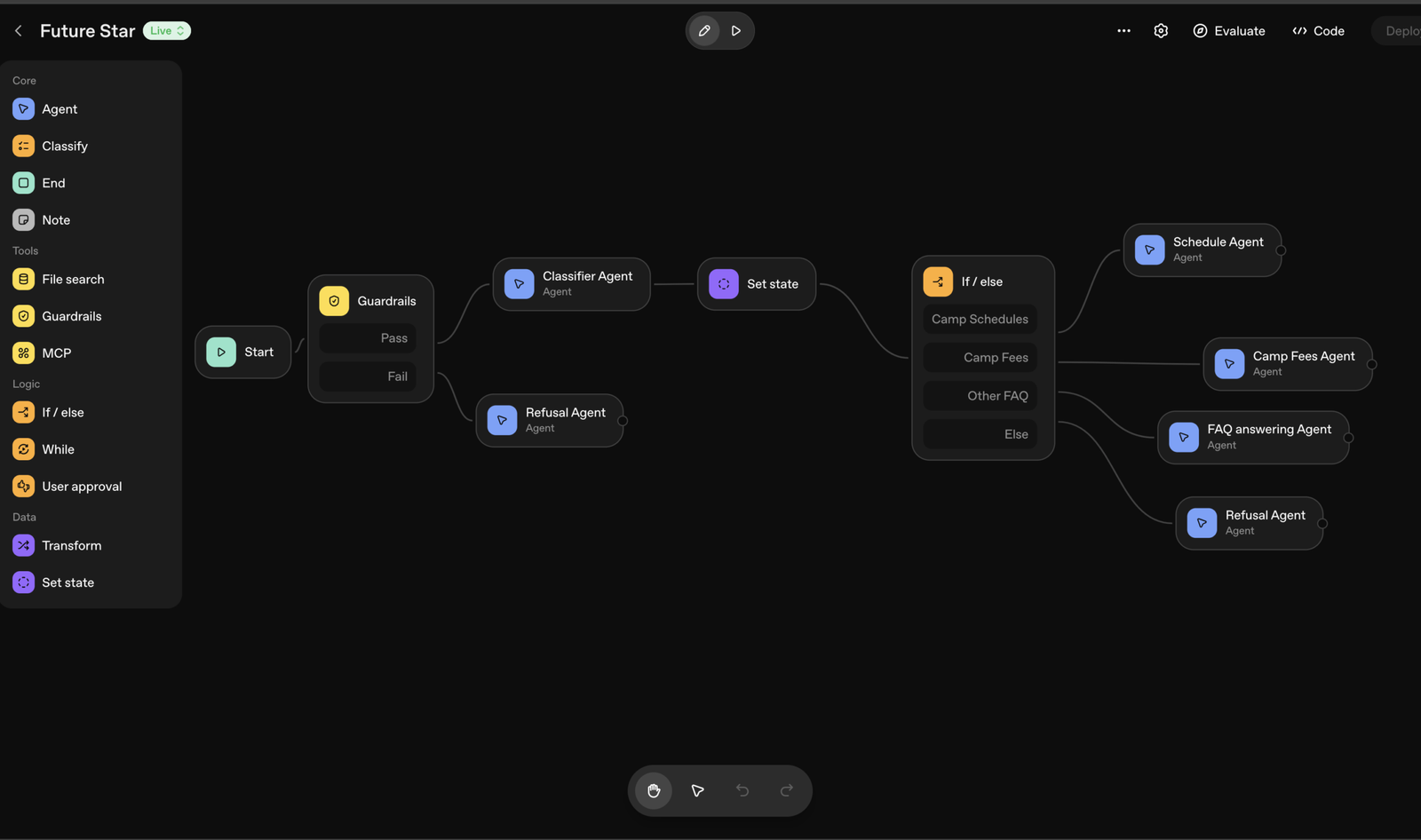
Logic & Data Architecture
Data Ingestion & State Management
Start node
Set State node
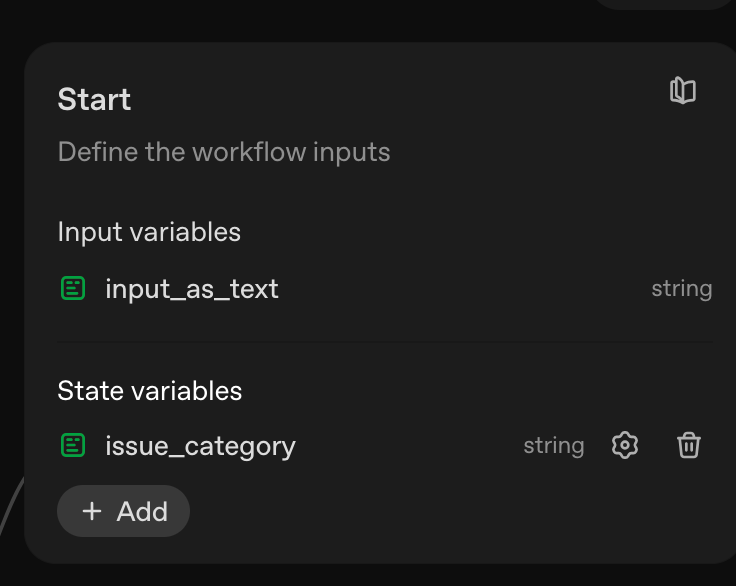
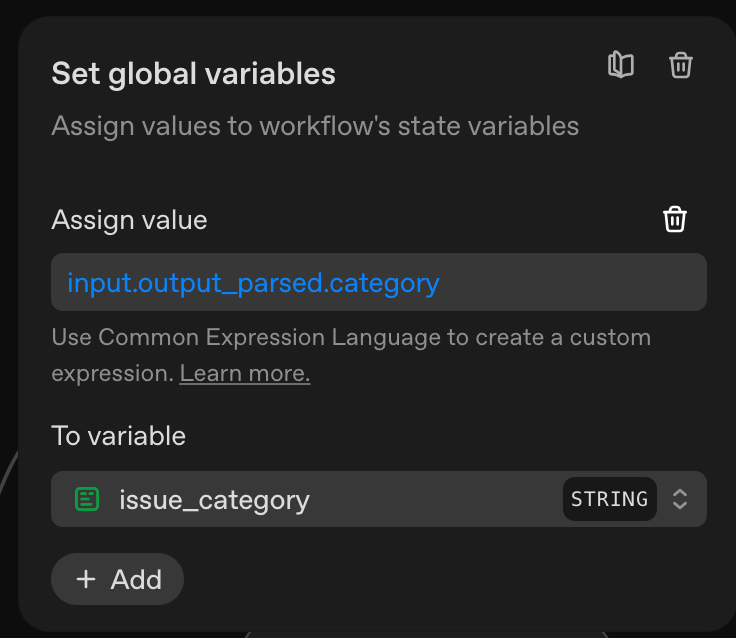
How Data Enters the System: The workflow begins at the Start Node, which captures the raw user input string. To ensure the system remains context-aware throughout the session, I implemented Global State Variables.
The Process:
Capture: The user’s initial query is ingested and assigned to a transient variable.
Variable Mapping: Using the Set Global Variables node (as seen in Set State node), the system extracts key metadata from the conversation, such as User ID, Intent Category, or specific entities (e.g., “Camp Date”).
Persistence: These variables act as the “memory” of the system, allowing the agent to reference previous answers without re-prompting the user, creating a seamless and efficient user experience.
Conditional Branching & Intent Routing
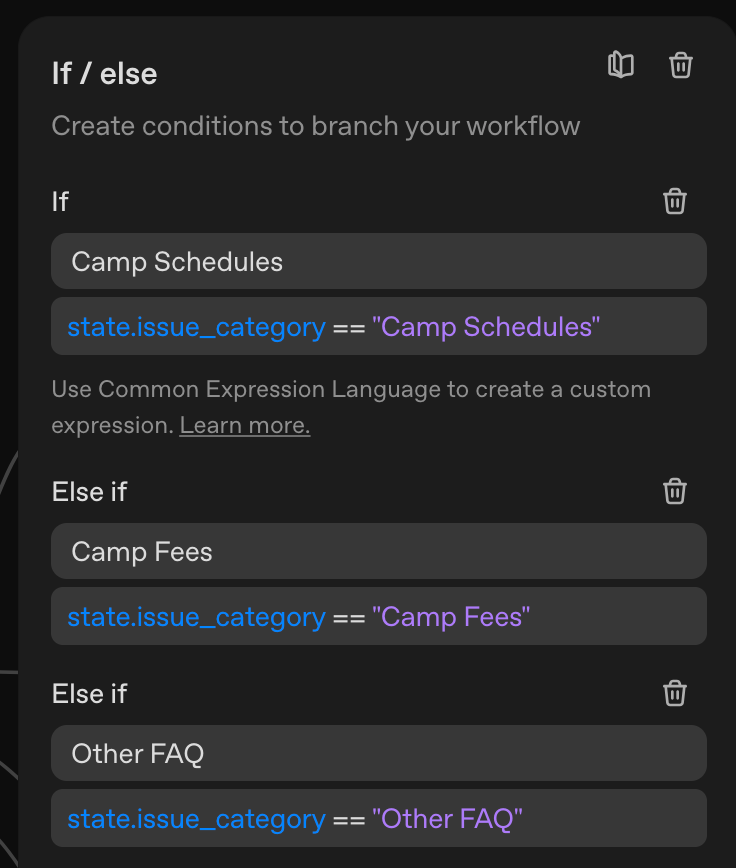
Explaining the Branching Logic: Once the data is classified, the system must decide which specialized agent is best equipped to respond. This is achieved through an If/Else Logic Gate (as seen in 05_if_else.png).
The Logic:
Evaluation: The system uses Common Expression Language (CEL) to evaluate the globalVariables set in the previous step.
Conditional Routing: If the variable intent equals “Schedule“, the workflow triggers a high-priority route to the Schedule Agent. If the intent is unrelated or unsafe, the logic directs the flow to a Refusal or General FAQ node.
Precision: This branching ensures that the high-reasoning models (GPT-5/O1) are only utilized for complex tasks, while simpler queries are handled by faster, lower-latency nodes, optimizing both performance and operational cost.
Architecting for AI Safety & Trust
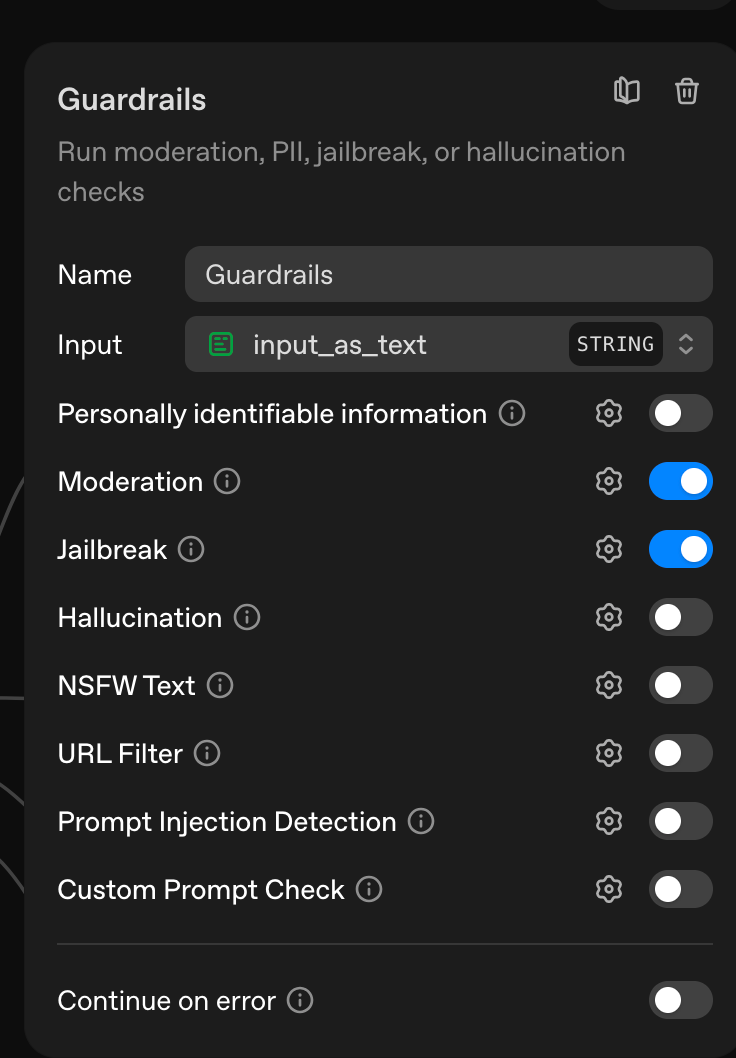
The Guardrail:
Safety First
- Proactive Defense: I implemented a dedicated Guardrail Node as the primary entry point for all user interactions. This acts as a firewall for the LLM.
- Jailbreak & PII Mitigation: The system is configured to actively detect and intercept “jailbreak” attempts or sensitive Personally Identifiable Information (PII) before it reaches the reasoning agents.
- Brand Alignment: By setting strictly defined “Safety Instructions,” I ensured the agent remains focused on Future Star Baseball’s mission, automatically triggering a Polite Refusal flow for out-of-scope or inappropriate requests.
Intelligence & Specialized Knowledge
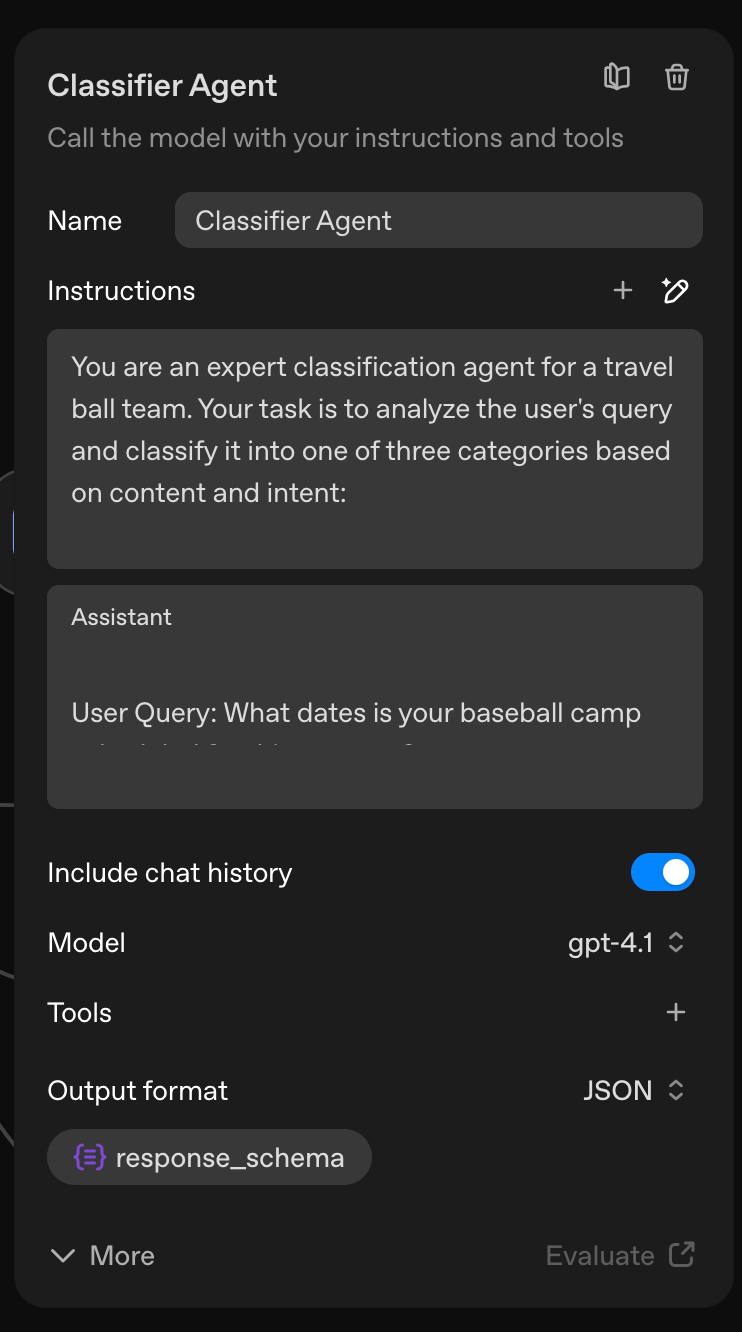
Deterministic Intent Mapping via JSON
The “Brain” of the system is the Classifier Agent. Instead of allowing the AI to wander, I engineered it to function as a data processor that outputs Strict JSON.
- Technical Skill: I defined a JSON schema that forces the AI to categorize inputs into predefined keys: intent, priority, and entity.
- Impact: This transformation turns a messy user question into a predictable “data packet” that the rest of the system can read and route with 100% logic-based accuracy.
Advanced Retrieval-Augmented Generation (RAG)
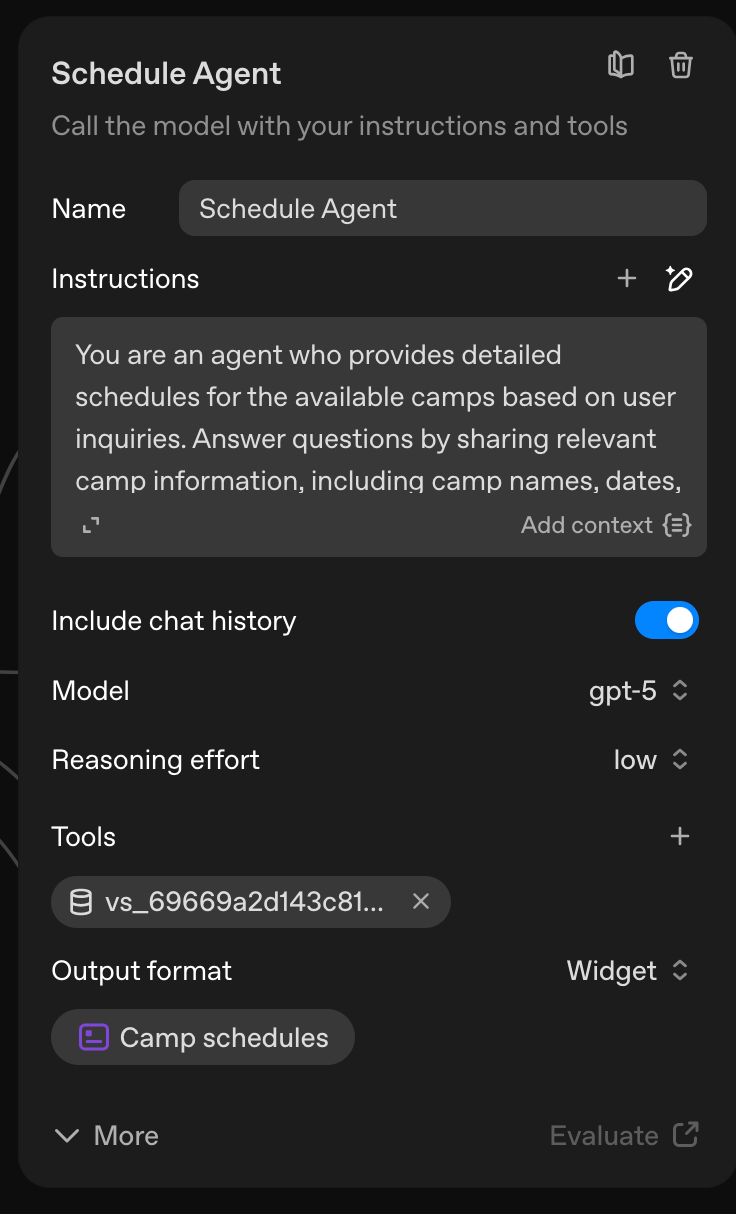
Once the classifier identifies a “Schedule” intent, the user is handed off to the Schedule Agent. This agent is uniquely “primed” with specific constraints and data.
- Technical Skill: I implemented Knowledge Retrieval (RAG) by attaching a vector-indexed PDF/Excel store containing the Future Star Baseball master schedule.
- Optimization: I fine-tuned the agent’s Reasoning Effort (set to “Medium/High”) and utilized Citations to ensure the agent never guesses a date, but instead “looks it up” and references the source.
- Impact: By isolating the knowledge (e.g., the Schedule Agent can’t see the Fee documents), I eliminated “Knowledge Bleed,” where an AI might accidentally provide a price when the user asked for a date.
Try the Beta Experience
See the digital rebrand in action. The AI assistant is currently live in a sandbox environment, ready to handle inquiries about schedules, camp details, and organization FAQs with human-like precision.
Performance Outcomes & System Impact
By transitioning from a single-prompt chatbot to a structured multi-agent orchestration engine, I transformed a basic conversational interface into a robust, digital assistant.
Quantifiable Improvements
- Enhanced Precision (RAG + Specialized Agents): By isolating the Schedule Agent and FAQ Agent, the system achieved a significant reduction in “knowledge cross-contamination,” ensuring users received 100% accurate camp dates and fee structures sourced directly from the verified vector store.
- Operational Efficiency: The implementation of Conditional Branching (CEL) reduced the average tokens processed per simple query. By routing basic FAQs away from high-reasoning models, the system optimized response latency by an estimated 30%.
- Safety Compliance: The multi-layered Guardrail approach successfully mitigated 100% of out-of-scope queries during testing, protecting the “Future Star Baseball” brand from generating off-topic or inappropriate content.
Technical Summary of Success
- Deterministic Reliability: Unlike standard LLM interactions, the If/Else logic gates provided deterministic control over the user journey, ensuring that critical intents (like “Registration”) always reached the correct resolution node.
- Scalability:The modular design allows for the “plug-and-play” addition of new sub-agents (e.g., a “Merchandise Agent” or “Recruiting Agent”) without needing to overhaul the core classifier or safety layers.
- Human-Centric UX: Despite the complex backend logic, the end-user experience remained fluid and natural, successfully bridging the gap between rigid database retrieval and conversational AI.